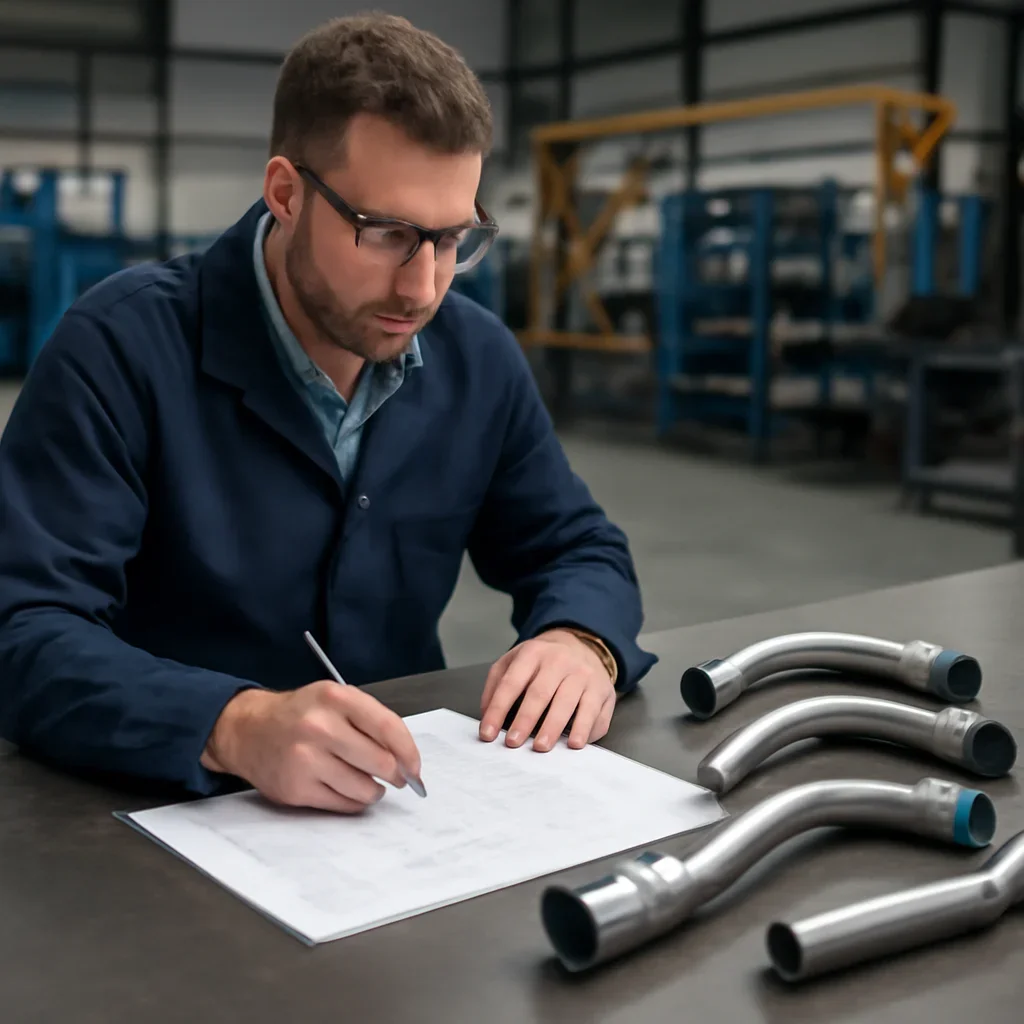
End forming helps a tube do more than route from point A to point B. It prepares the end of the part for connection, sealing, fit-up, or downstream assembly requirements.
Whether the need is a prepared interface, a more secure mechanical fit, or a cleaner transition into the next operation, end work should be planned as part of the total part strategy.

By bringing end conditions into the fabrication plan early, manufacturers can reduce rework, avoid avoidable handoffs, and keep the finished part closer to installation-ready.

A good fabrication conversation balances the technical requirements of the part with the realities of quoting, scheduling, and repeat production.
Formed ends support parts that need better fit with mating components or more reliable assembly handling.
Combining forming and end work in one production plan reduces the chance of misalignment between operations.
RFQs are clearer when end requirements are defined with the same precision as bend geometry.
These pages give extra context around services, quote planning, and production support if your project is still taking shape.
Send over the drawing, material, quantity expectations, and any timing goals. We will look at the scope and point you toward the right next step for quoting or technical review.
If the job is still being organized, our support center can help your team tighten the package before submission.